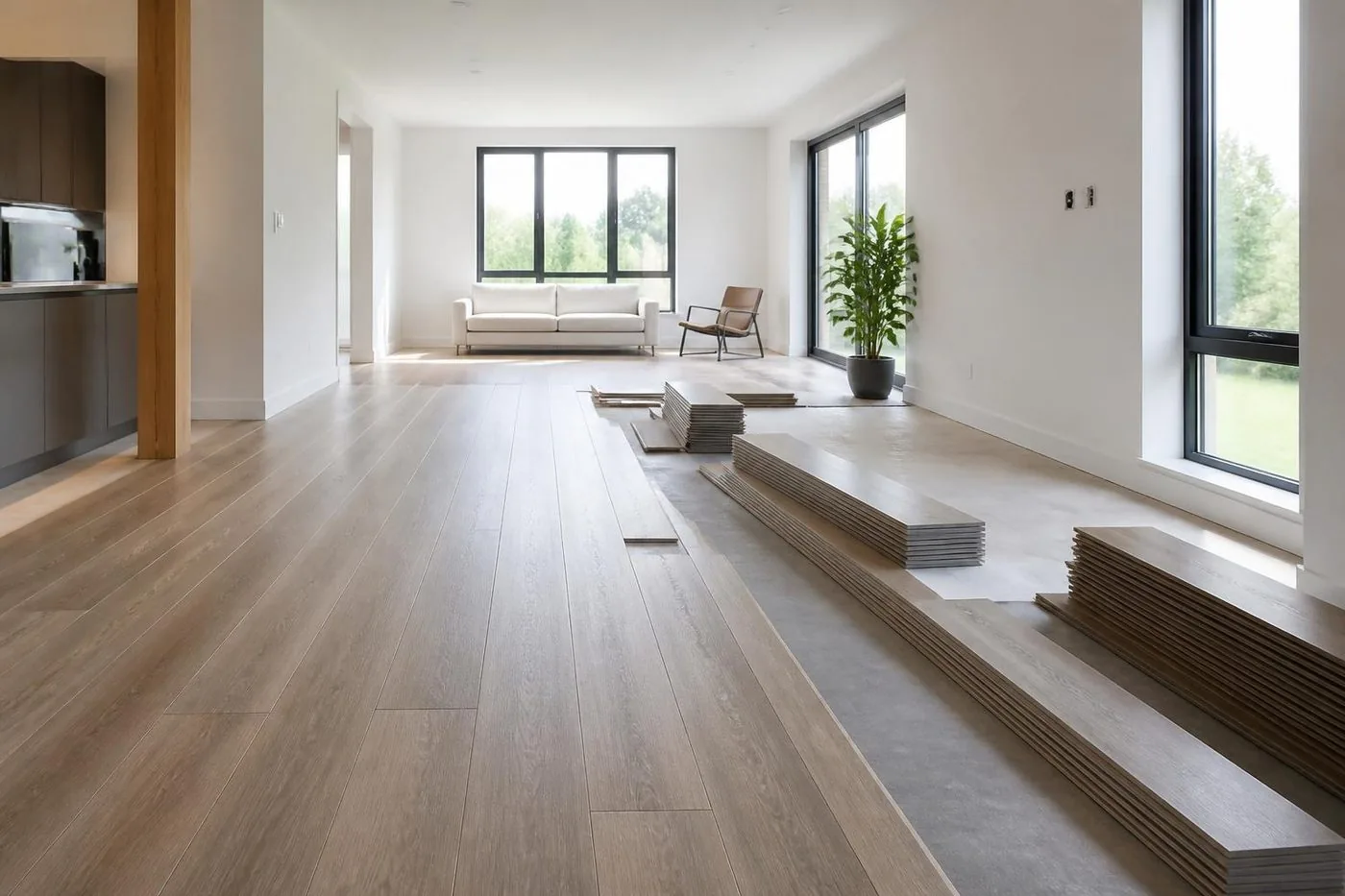
Few questions come up at our customers' kitchen tables as often as this one: should the new floor be luxury vinyl plank or laminate? Both give you the look of wood without the upkeep of wood, and both click together over a prepared subfloor. But they are built differently, and in a place like Broomfield and Boulder County those differences show up in real life - in a basement after a snowmelt leak, in a hallway with two dogs, in a living room where January humidity drops into single digits.
How the two floors are actually built
Luxury vinyl plank is made of layered vinyl: a printed image, a clear wear layer on top, and a flexible or rigid core underneath. Rigid-core versions are stiff and stable, which is why they are so popular over slightly imperfect slabs. Laminate is a different animal. A photographic layer and a hard protective coating sit on top of a fiberboard core. That core is dense and stable, but it is wood-based, and wood fibers swell when they stay wet.
That single difference - a vinyl core versus a fiberboard core - drives most of the practical advice below. It is also why we describe the two floors as cousins rather than twins.
Water, basements and spills
Many homes across Boulder County have finished or walk-out basements on concrete slabs. Moisture there is usually modest, but it is never zero, and we always test the slab before anything goes down. Because vinyl plank does not absorb water, a washing-machine overflow or a failed sump pump is an annoyance, not a rebuild. Laminate handles a quick wipe-up of a spilled glass just fine, yet it can swell at the seams if water sits.
For that reason we lean toward LVP in below-grade rooms, mudrooms where snow and hiking mud come in, and anywhere near a dishwasher or refrigerator water line. In a dry, upstairs bedroom or home office, laminate is a perfectly reasonable choice. If you want help weighing a particular room, our flooring installation team looks at the slab and subfloor before recommending anything.
Pets, kids and everyday wear
Laminate's hard surface resists scratches very well, which suits big dogs with long nails. Vinyl plank is slightly softer, but a good wear layer holds up well to claws and rolling toys, and it is quieter and a touch warmer underfoot. Pet accidents are where vinyl pulls ahead: urine that is cleaned promptly will not soak into the plank itself.
Neither floor is scratch-proof, and neither likes a sliding furniture leg without felt pads. We find that families with active dogs, kids and Colorado mud season tend to be happiest with LVP, while quieter households that want a firm, wood-like feel often love laminate.
Dry air, temperature swings and sun
Winter indoor humidity along the Front Range can fall below 20 percent, and we get large day-to-night swings. Real wood reacts to that; vinyl and laminate react far less. Both floors still need a small expansion gap around the edges so they can float, and vinyl in particular can expand in a sun-baked room with big south-facing windows. Window film or curtains on those exposures protect the floor and the furniture.
If you are also thinking about warm-underfoot heating, read our guide on flooring over radiant heat before choosing - both products have temperature limits worth knowing.
Feel, sound and looks
Laminate tends to feel solid and slightly cool, with a textured surface that can look convincingly like oak or hickory. Vinyl plank feels a bit softer and quieter, and today's best products have embossed grain that follows the printed pattern. In the home we put both next to each other in your own light, because a color that looks gray in a showroom can read warm or green in a room full of afternoon sun. That is the whole reason our mobile design showroom comes to you.
What each costs installed in Colorado
Prices move with brand, thickness, wear layer, and how much prep your floor needs. These are honest ballparks for a straightforward install including removal of old flooring, not guarantees - your measured quote is the real number.
| Floor | Typical installed price per sq ft | Water tolerance | Best rooms |
|---|---|---|---|
| Laminate | $4 - $9 | Low to moderate | Bedrooms, offices, dry living areas |
| Luxury vinyl plank | $5 - $11 | High | Basements, kitchens, entries, laundry |
Stairs, uneven slabs, and heavy furniture moving all add labor. Financing is available subject to credit approval - see our financing options.
Resale and long-term value
Buyers in the Denver-Boulder market increasingly expect water-resistant floors in basements and kitchens, which helps LVP. Laminate can still present beautifully and photographs well. Whichever you pick, consistent flooring through open areas reads as a cleaner, more finished home. Read what neighbors say about the process on our reviews page, which shows our 4.6 rating from 83 Google reviews.
How to decide
- Choose LVP for basements, kitchens, mudrooms and any room with water risk.
- Choose laminate for dry rooms where you want a firm, crisp wood look.
- Ask to see a sample in the actual room, morning and afternoon.
- Get one complete installed quote including removal, prep, trim and cleanup.
We handle the furniture, old-floor removal, surface prep, installation, trim and cleanup, and within ten days we return to confirm your floor is performing well. If you are still torn, we are glad to talk it through at your home.
Not sure which one fits your home? Let us bring both samples to you.
Book your free in-home estimate